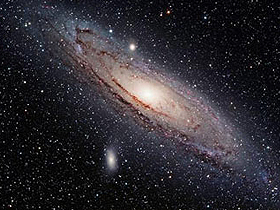
Science Continues to Support The Big Bang
2470






 07:52 Videos
 06:12 Videos
 07:54 Videos
 08:22 Videos
 06:43 Videos
 03:06 Videos
 11:46 Videos
 02:28 Videos
 06:12 Videos
 34:14 Videos
 03:48 Videos
 37:54 Videos
 01:02 Videos
 00:47 Videos
 01:51 Videos
 02:08 Videos
 02:57 Videos
 04:30 Videos
 02:25 Videos
 01:16 Videos
 00:31 Videos
 00:40 Videos
 00:31 Videos
 00:50 Videos
 00:33 Videos
This video explores how contemporary scientific advancements, such as data from the Boomerang balloon and the WMAP satellite, reinforce the Big Bang theory. It details findings regarding the age of the universe and the distribution of matter. Ultimately, the video argues that the complex, delicate balances within the universe serve as clear evidence of Allah's artistry in creation, refuting the notion of coincidental formation.
The WMAP satellite provided precise data showing the universe is 13.73 billion years old and determined its composition to be 4.6% ordinary atoms, 23.3% dark matter, and 72.1% dark energy.
The existence of such delicate balances and complex order within the universe demonstrates that it could not have formed through coincidental causes. Instead, this structure serves as clear evidence of a supernatural creation.
The Big Bang highlights that the universe had a beginning and originated from a state of expansion. This matchless plan and order proves the existence of a Creator with infinite wisdom who brought matter into being from nothing.
Research indicates that galaxies formed where matter was relatively clustered roughly 350,000 years after the initial expansion. These structures took shape due to gravitational forces, further validating the underlying principles of the Big Bang.
This video explores how contemporary scientific advancements, such as data from the Boomerang balloon and the WMAP satellite, reinforce the Big Bang theory. It details findings regarding the age of the universe and the distribution of matter. Ultimately, the video argues that the complex, delicate balances within the universe serve as clear evidence of Allah's artistry in creation, refuting the notion of coincidental formation.
The WMAP satellite provided precise data showing the universe is 13.73 billion years old and determined its composition to be 4.6% ordinary atoms, 23.3% dark matter, and 72.1% dark energy.
The existence of such delicate balances and complex order within the universe demonstrates that it could not have formed through coincidental causes. Instead, this structure serves as clear evidence of a supernatural creation.
The Big Bang highlights that the universe had a beginning and originated from a state of expansion. This matchless plan and order proves the existence of a Creator with infinite wisdom who brought matter into being from nothing.
Research indicates that galaxies formed where matter was relatively clustered roughly 350,000 years after the initial expansion. These structures took shape due to gravitational forces, further validating the underlying principles of the Big Bang.

Install the app
Tap the share button , then select "Add to Home Screen".